
This MITSloan & BCG report – based on global survey of 2,197 managers and interviews with 18 executives – identifies a wide range of AI-related cultural benefits at both the team and organizational levels. Among survey respondents with AI implementations that improved efficiency and decision-making, 75% reported on improvements in team morale, collaboration and learning. The benefits of artificial intelligence go well beyond improved efficiency and decision-making. AI can also improve organizational effectiveness and strengthen teams and enterprise cultures.
These cultural changes are more than a side benefit. AI-related cultural and financial benefits build on each other. Survey respondents who saw significant financial benefits from their AI initiatives were 10 times more likely to change how they measure success than those who saw no such benefits. In some cases, AI helped leaders identify new performance drivers, which led to new assumptions, objectives, measures, and patterns of behavior, along with new areas of accountability. AI also helped these organizations realign behaviors and become more competitive.
This research indicates that managers often recognize the need to cultivate team acceptance of AI, such as by including end users in the development process, building trust in AI system performance, and encouraging teams to be open to changing their work processes. Close to half the respondents believed that mistrust of AI stemmed from a lack of understanding (49%) or training (46%). Still, no amount of user education can overcome a poor tool. Data of insufficient quality (31%), failure to meet expectations (20%), or just incorrect solutions (14%) all can contribute to mistrust in the system.
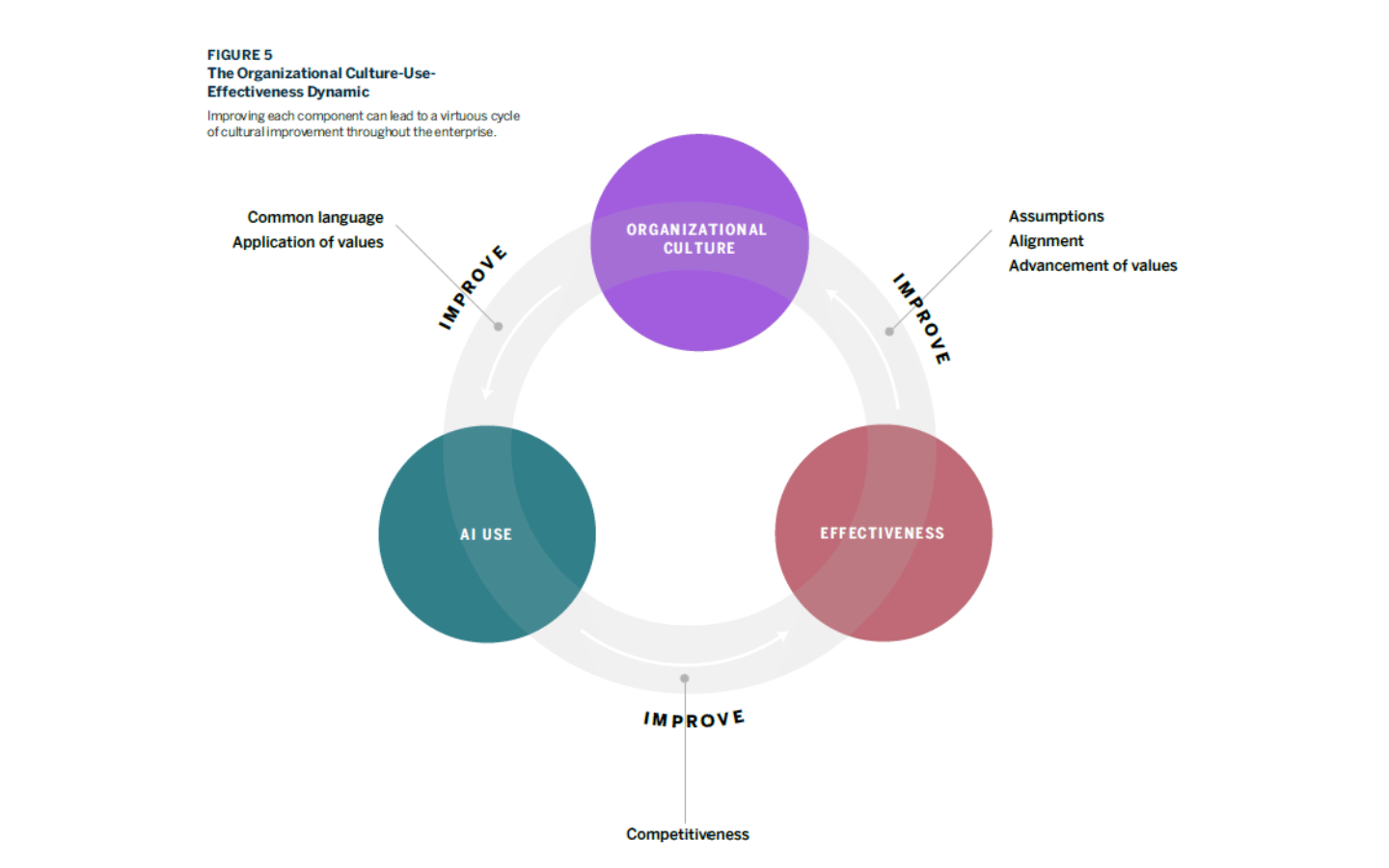
The Culture-Use-Effectiveness dynamic is different at the organizational level than it is at the team level. The figure below shows the cultural-use-effectiveness dynamic at the organizational level: Organizational culture can improve AI adoption, which in turn improves organizational effectiveness, which in turn improves organizational culture.