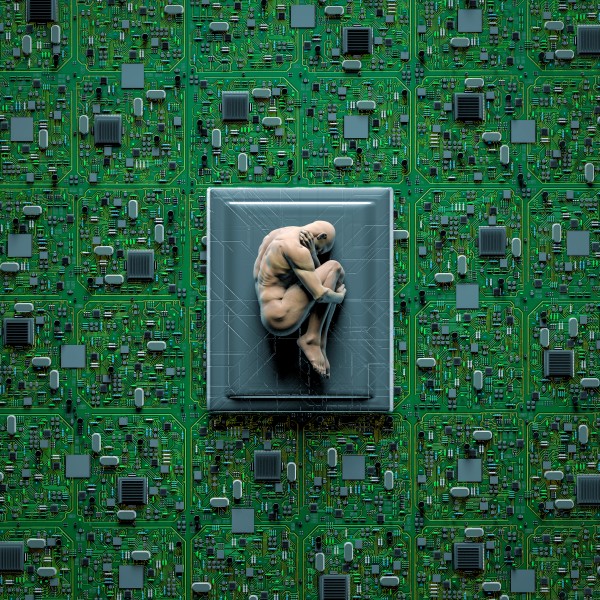

Dr. Vladi Dvoyris, community member and DigitalRosh mentor shares his insights on the chronic information load that wears us down. Digital Health might not be what you think. Insights of a technology lover.
I’m considered a “techie” among my friends. It’s relative, of course, but it seems easy for me to get along with and understand most devices, software and apps. I can program automated processes that save me time, and when one WhatsApp’s me with a simple “Hi” from an unidentified number, they will immediately receive an automatic message asking them to identify themselves and tell me what they want, before we continue. This is how I live my life, while constantly juggling things. But for the past two years, even as the whole world put itself on a COVID-sponsored hold, I kept working – and on my way to total attrition, I realized a thing or two about life.
But before elaborating on that, a side note is in order. Last week, Israel experienced a teachers’ strike. For me, personally, this strike was not too much of a challenge – on the contrary, I wrote here a few days ago that it allowed me to sleep later in the morning, which is a blessing. However, this is the privilege of people whose schedules are relatively flexible, on the one hand, and whose children are intelligent enough to cope even in an aching and failing education system, on the other. Yet eventually, the teachers’ strike is just a symptom of the larger problem – the cost of living is unbearable for most of our population, of which teachers are a part, and I really look at them and do not understand how one can get to the end of the month with such a salary when housing prices are rising, fuel prices are soaring, and fruit and vegetable prices may have already crossed the stratosphere on their way to outer space.
“What’s your problem?”, asks / states the average Israeli, “Get a high-tech job and make a nice wage.” They say that and think that in the end, some of the problems we face today may be solved in the future through high-tech – there will be no bus driver strike because the buses will be autonomous; the fruits and vegetables will grow themselves; and the kids will drop a token in the mouth of a mechanical instructor who will teach them, on YouTube, everything they want to know about Minecraft. Because automation and scalability and all that jazz mean that more people can enjoy the same service, paying less, and with fewer people maintaining the operation from the back end. Right? Well, yeah, but…
But Karl Marx and Martin Heidegger, and soon they will both rise against me from their graves, one in London and the other in Freiburg, for me having bound them in a single sentence. And all this because I want to talk about alienation, and forgive me for the threepenny philosophy – I may be a doctor, but when I went to dental school, they no longer taught philosophy there.
In his theory of alienation, Marx speaks of the feeling of alienation (Entfremdung) that accompanies the class division in industrialized society – alienation characterized by the alienation of man from his nature and the products of his work; whereas Heidegger discusses in his writings, among other things, the concept of “throwness” (Geworfenheit), that is, that man is thrown into the world in a way that he has no control over, and throughout our lives we struggle with this throwness – however, in vain, if you ask me. Resistance is futile.
Marx and Heidegger were right, each in his own way. One was the ancestor of communism, the other was a well-known Nazi supporter, but in the end, our modern, capitalist and liberal society made both their philosophical conceptions come true. Even in his worst nightmares, Marx could not foresee the degree of interpersonal alienation that digital technologies had brought to our world; and Heidegger could not imagine the degree of loss of control they brought with them, under the guise of equal opportunity and access to services for the masses.
I will probably not be the first to say this, but where digital technologies are a common, accessible and inexpensive commodity, authentic human touch becomes inaccessible, a premium product, a kind of luxury.
Today, the masses are already being sent by the banks to bang their heads against the app, while VIP customers have a personal banker; the cattle class checks in online and stands in line for a machine that will swallow their luggage, while the passengers who pay a few hundred dollars more will be personally escorted from their house step to their seat on the plane. Tomorrow, your kids will be learning math, Bible and literature in mass Zoominars with a thousand other kids (because this is the obvious solution to the chronic shortage of teachers), and maybe the education system will tell them to drop this and go straight to watching videos on YouTube, because this is how their lives would look later anyway; while those who can afford it will receive a high-level private education. And the next day, your HMO would offer you a device that would check you and write you a prescription (and the drone from the pharmacy is already on its way), and you will say this is great, technological, and very convenient and certainly saves waiting time for a doctor – but whoever can pay extra will get a human doctor, who will tell him to lose all these unnecessary medications and just have a rest for a day or two.
In case you asked – I’m not a Luddite. I love innovation and even make a living from it, but precisely because of this I am also aware of its dangers. As a devout technology user throughout the day, I notice the results: less human communication, more alienation, more overload, more attrition, and as a result, less human communication – a vicious circle that cannot be broken. If you only knew what words I use when I see someone sending me a voicemail on WhatsApp – half of it will make your ears fall; but then I, too, commit the same sins due to lack of time and patience, while secretly longing in my heart that I will at least understand the language I am being cursed at.
This cannot go on any longer. Recently I have started to mute or disconnect the phone more or less completely. I reply to WhatsApp messages later than one would expect, and to emails – within a day or two. I’d rather stay home than go places, and when I’m abroad – I’ll walk the streets or sit on a park bench and not go into a museum. I think it’s a sign that chronic information overload has worn me down, but maybe that’s how I should have acted in the first place to prevent this from happening.
Back in the days of Karl Marx, I would go on a six-month or year-long vacation at a sanatorium in Switzerland, to heal my nerves. In 2022, I do not have the money for such a privilege, but hey, they say there are great mindfulness apps, and if I’d only find ten minutes for them …