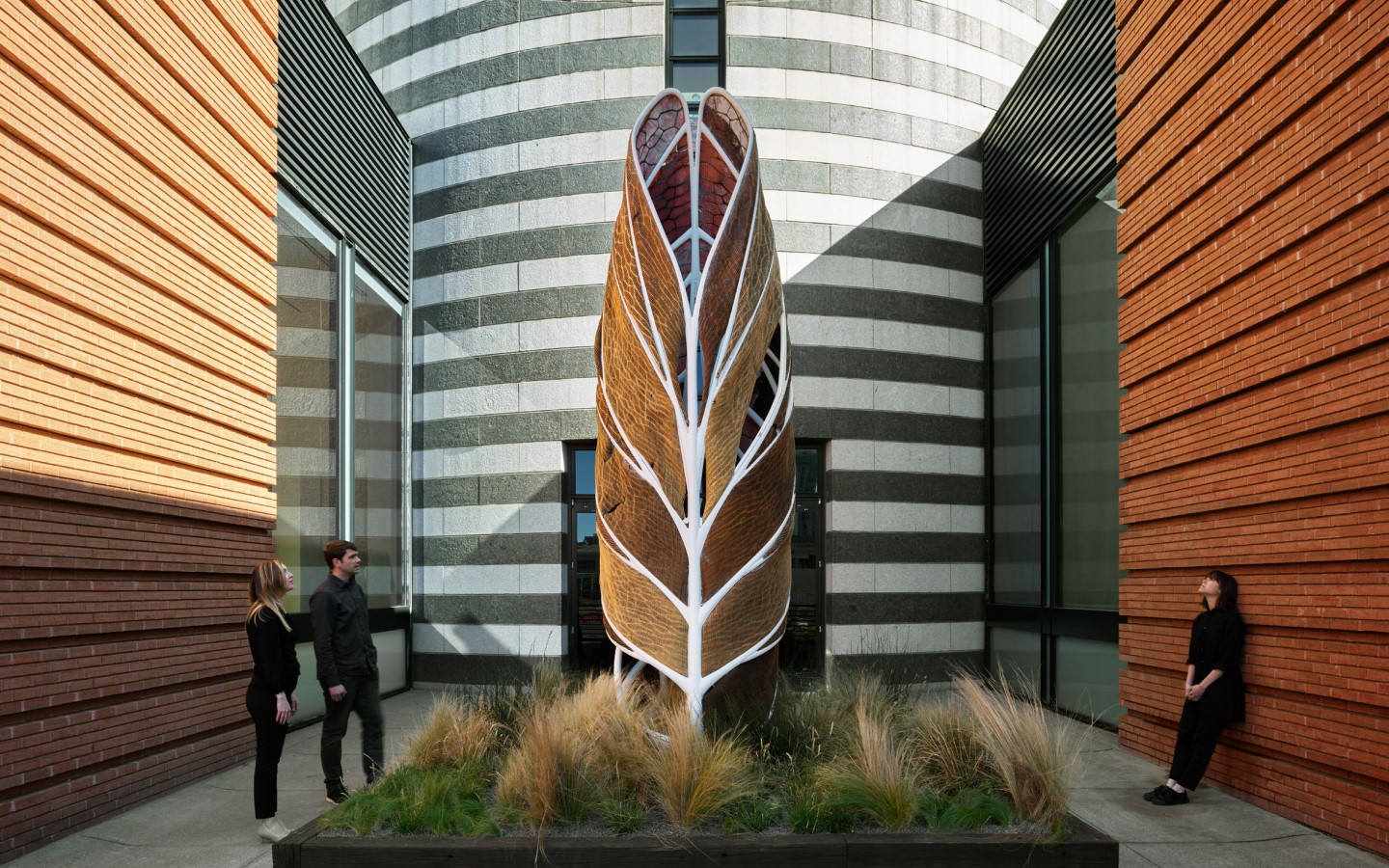
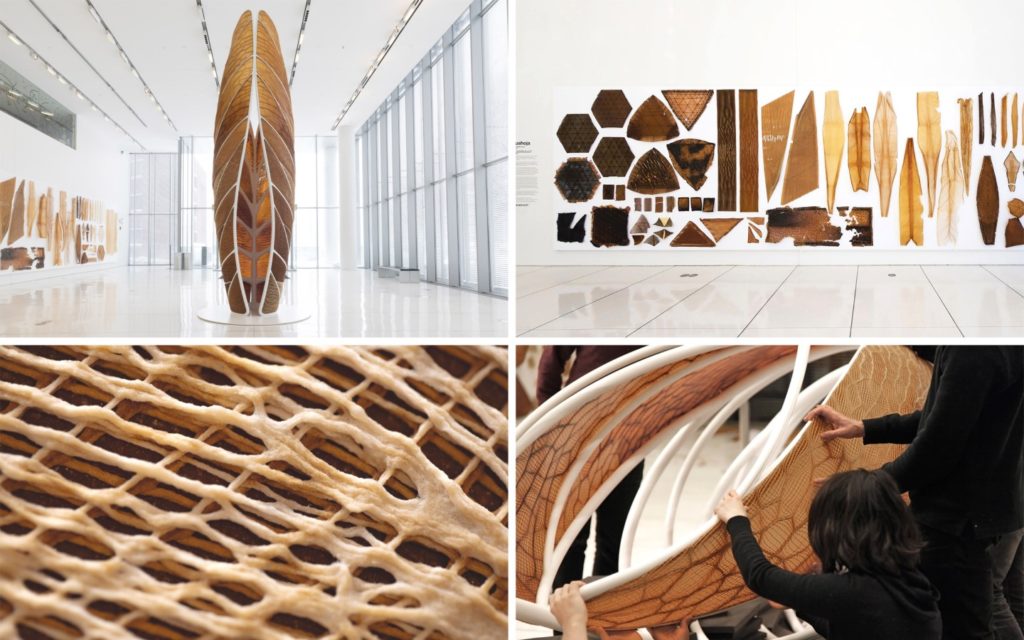
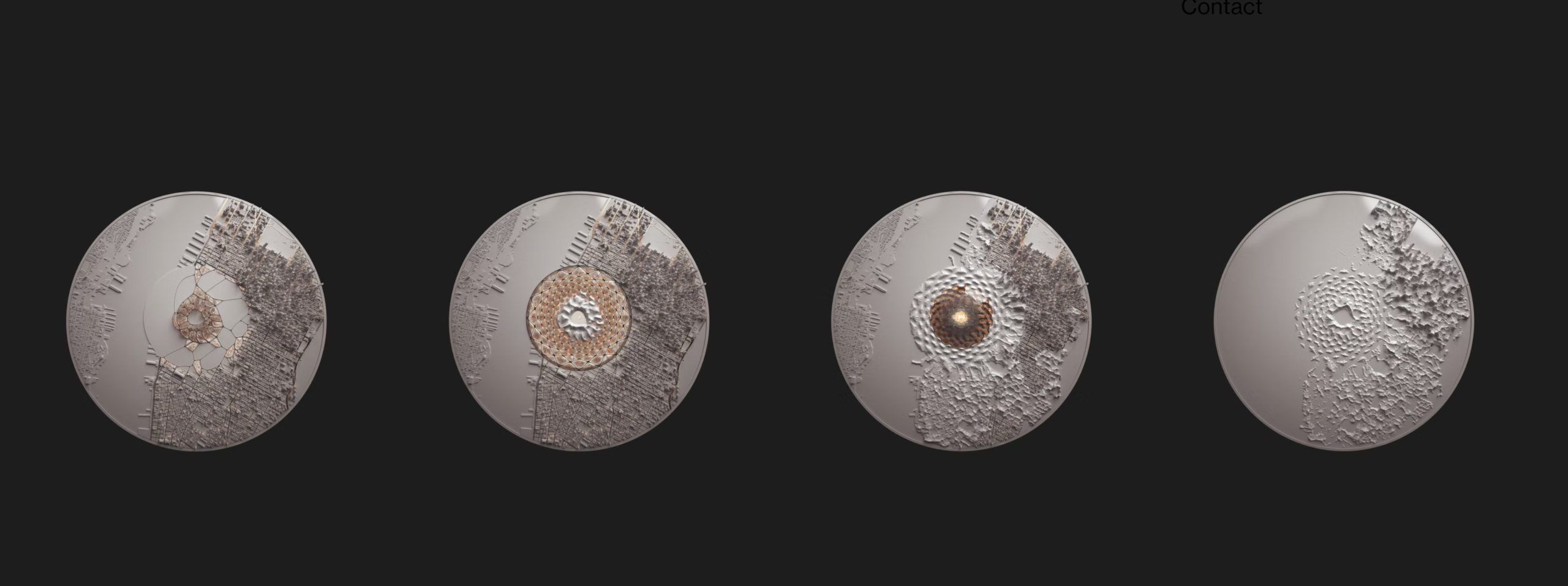
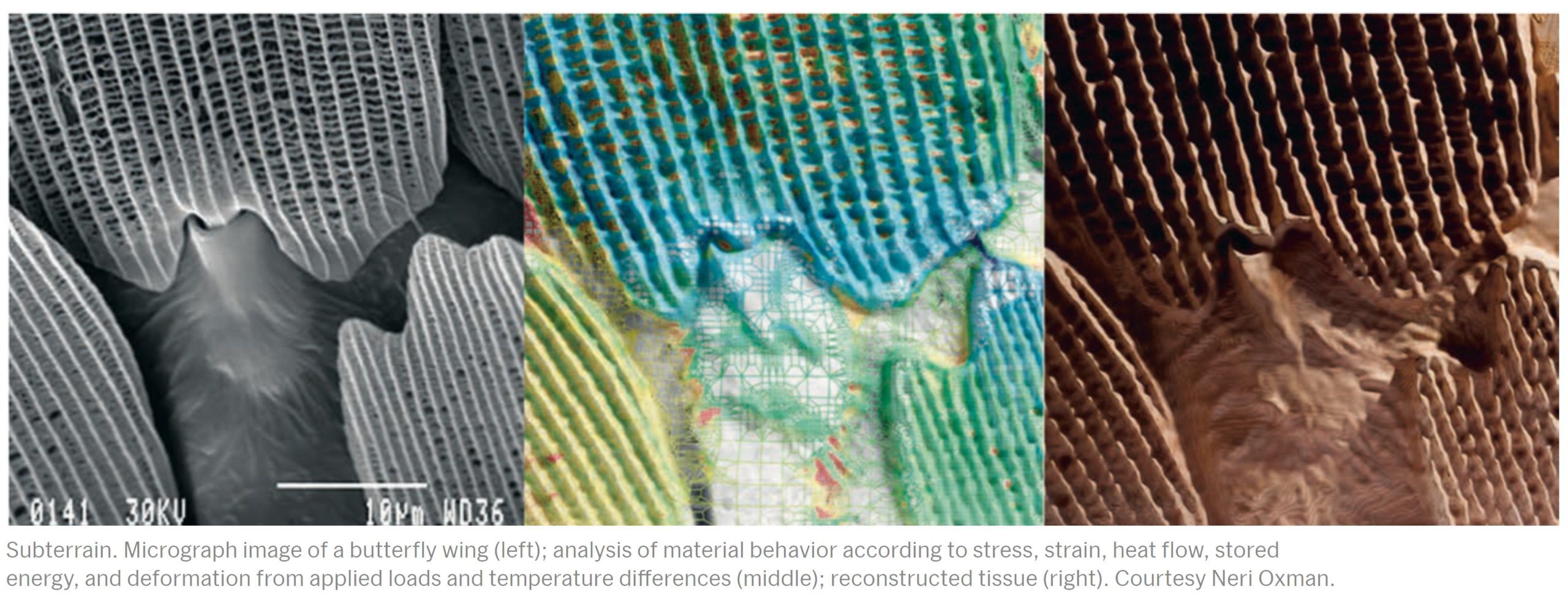
A groundbreaking approach in the field of sustainable, natural architecture. Using computing tools, the Oxman research group – led by Neri Oxman, an architect and designer, investigates the use of ecology and technology to realize the principles of sustainability on a human scale together with nature. The goal is to divert the built to the great and move from the world of the machine to the era of the natural organism.
Although you hear more and more about the concept of “green construction”, Oxman’s approach and directions are completely different. The field of construction and architecture is still conducted in a traditional way and architectural planning is at a crossroads: how to continue building for the sake of humanity – but work with and for nature at the same time.
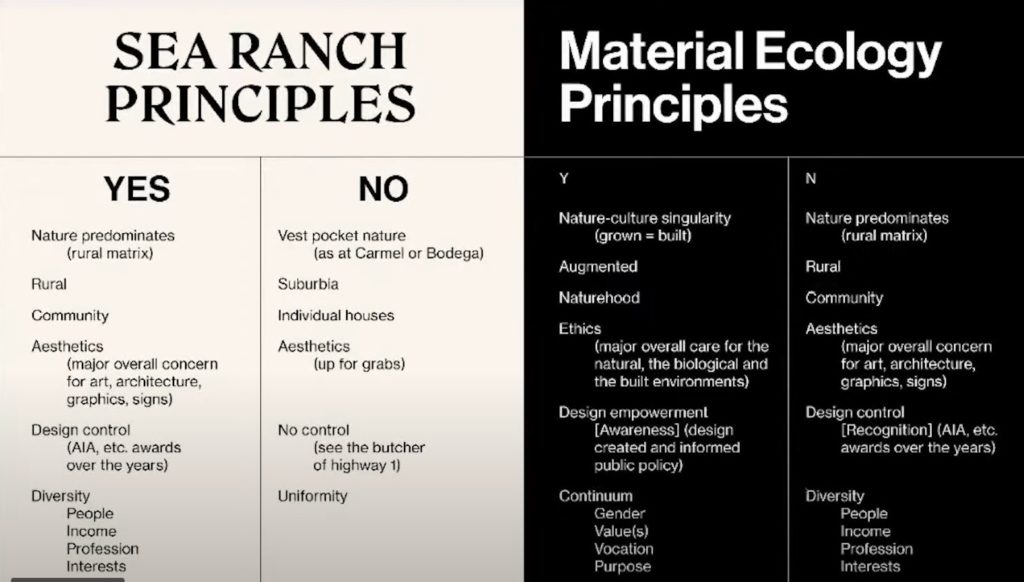
Neri Oxman , Israeli-American architect, digital designer and artist. Studied architecture at the Technion and the Department of Medical Sciences at the Hebrew University of Jerusalem. She did her doctorate at MIT on Design Computation where she coined the term Material Ecology describing her field of research. Founded, managed, and today is a visiting professor at MIT’s MEDIA LABS, where they coined the name of the group and the basis of their work – Mediated Matter (a name with several meanings and the main, perhaps, translated into Hebrew – mediating matter). She connects computing, biology, sustainability and 3D printing.
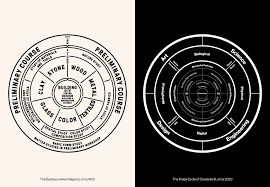
Since 2020, Oxman has run her own laboratory, in Manhattan, USA. Her goal is to increase the connection between built, natural and biological environments by using design principles inspired by nature – for and with nature – and implementing them in the invention of new technologies. Areas of application include architectural design, product design, design Fashion, as well as new technologies for digital manufacturing and construction and creating flow over hardware, software and “wet tools”. All of these – according to Oxman, allow “design to empower science and science to empower design”.
Any new technology platform can be applied across a wide range of industries and scales—from consumer products to urban programs, from wearable drugs, from organisms to rockets. Hierarchical design at this scale makes it possible to build a library of tools and techniques that can be continuously improved for new applications and domains.
One must move from the world of the machine to the world of the natural organism. From objects, buildings and constructed streets – to build a dynamic, non-polluting, growing and biodegradable environment.
For demonstration: two unique projects (from a large collection of projects of different scales).