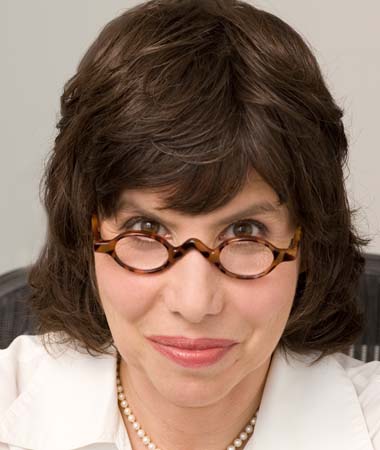

An article by Alison Gopnik about giving AI systems some of the common-sense learning capacities that we take for granted in young children.
Predictability is the whole point of Large Language Artificial Intelligence (AI) models. The models are trained by giving them a few words of text and asking them to predict the next few words for billions of cases. By contrast, young children are exposed to very different kinds of data. They learn from real interactive experiences with just a few people, animals, and objects. The information they get isn’t tightly controlled, but spontaneous and haphazard. And yet they are very good at generalizing to new situations.
This contrast between the creative 4-year-old and the predictable AI may be one of the keys to understanding how human intelligence works and how it might interact with artificial intelligence. Prof. Gopnik says that psychology, and especially child psychology, will play a crucial role in creating and using the technology of the future.
There are two essential techniques that allow children to go beyond the kind of statistics data extraction that is standard in machine learning: (1) They intuitively build abstract models of the world around them in physics, biology, math, and even psychological and social. And (2) Exploration. Children are active, experimental learners.
Trying to design computers that learn like children is a fascinating project for developmental psychologists because it makes us realize the power and mystery of children’s minds. And we will need to incorporate some childlike model-building and exploration into AI systems to solve even quite simple problems. Prof. Gopnik questions some AGI researchers who attempt to create AGI that could be on a par with humans. She suggests that, perhaps, a better way to think about artificial intelligence is that it can create technologies that are complementary to human intelligence rather than in competition with them.
About the Author:
Alison Gopnik is a distinguished professor of psychology, affiliate professor of philosophy, and member of the Berkeley Artificial Intelligence Research Lab at the University of California, Berkeley. She studies the cognitive science of learning and development. She is the author of The Scientist in the Crib, The Philosophical Baby, and The Gardener and the Carpenter. She is a Guggenheim fellow, a fellow of the Cognitive Science Society and the American Association for the Advancement of Science, and a member of the American Academy of Arts and Sciences. She writes the Mind and Matter science column for the Wall Street Journal; has written widely about cognitive science and psychology for The New York Times and The Atlantic, among others; and has frequently appeared on TV and radio, including The Colbert Report and The Ezra Klein Show.
Stanford Psychology Podcast with Alison Gopnik:
How Can Understanding Childhood Help Us Build Better AI?