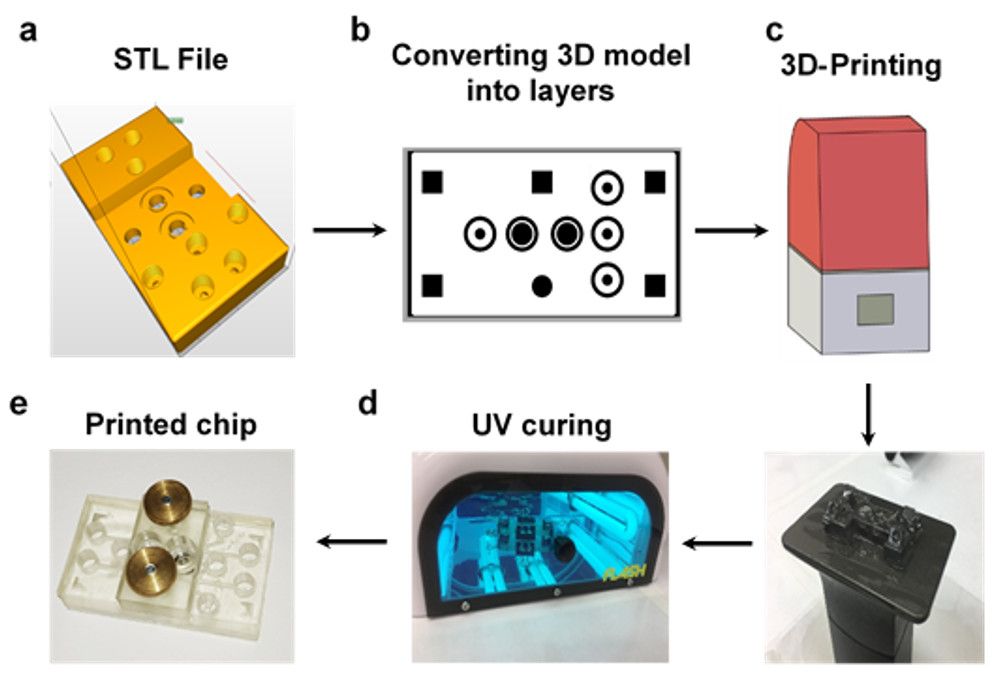
The article presents 3D-print-based fabrication methods for a generic multi-organ-on-a-chip device. The goal is to create a microfluidic device (a “chip”) that would mimic the physiological functions of a human organ. It’s a very interesting emerging technology, using advanced 3D printing.
The understanding that systemic context and tissue crosstalk are essential keys for bridging the gap between in vitro models and in vivo conditions led to a growing effort in the last decade to develop advanced multi-organ-on-a-chip devices.
For example: A research group from the Hebrew University led by Prof. Ofra Benny has developed a method that enables perform a variety of possible treatments simultaneously on a tiny tissue of a cancerous tumor sampled from a patient. In this way, they can quickly reach insights about the most effective treatment for the patient and implement it immediately.
The concept of an “organ on a chip” opens directions in medical research and diagnostics. Using microfluidic and other technologies the group investigate how physical and mechanical parameters of nanoparticles affect interactions with cells and tissues. Advanced 3D tissue-like patient-derived cultures and tumor-on-a chip technology are developed to enable to study activity and toxicity of anti-cancer drugs and nano-therapies for personalized medicine.