In an era polarized by ongoing arguments in social media and elsewhere, it is often easier for people to become strong advocates for opinions they support, no matter whether these opinions are supported by enquiry and sound evidence or not. At times, the opinions advocated for can be harmless, however, often they can cause grave damage, such as in the case of the anti-vaccination movement.
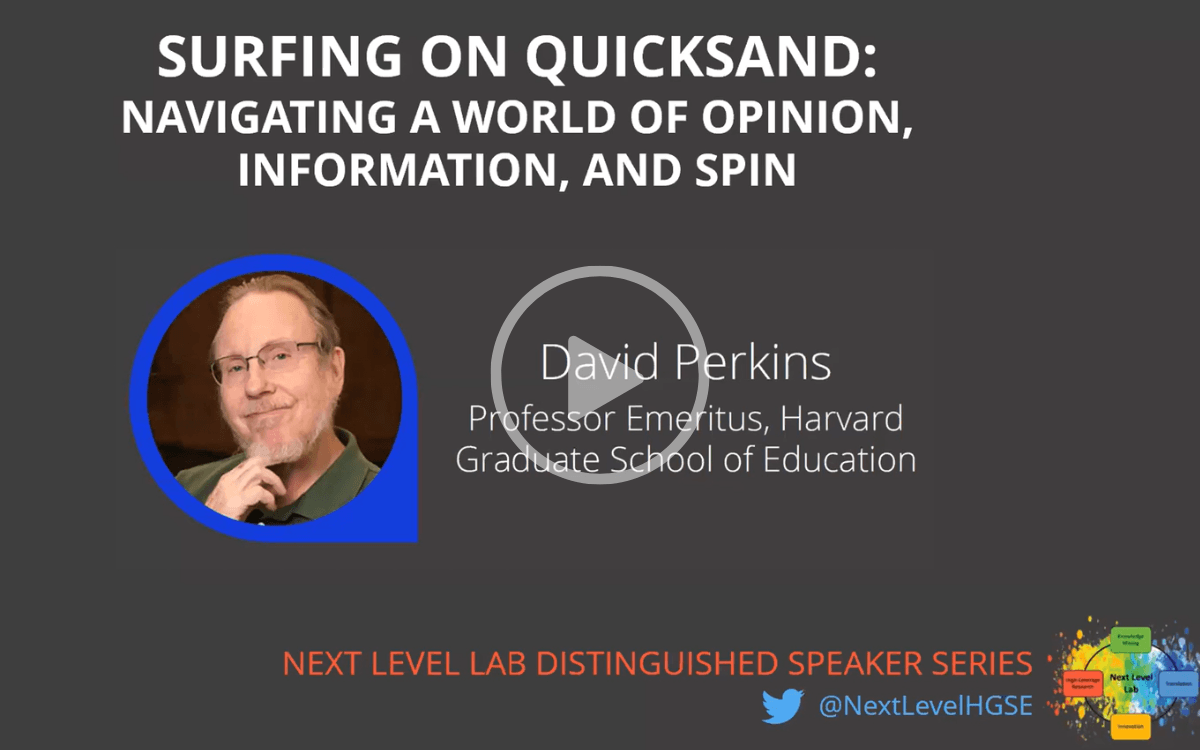
In his talk at the Next Level Lab (NLL) Distinguished Speaker Series, Prof. David Perkins of the Harvard Graduate School of Education discusses the differences between enquiry and advocacy. In our polarized era, strong positions almost immune to counterevidence figure in many people’s worldviews. Some eras and settings have seen less of this, some more, but it’s always there. Why does this happen, especially around matter-of-fact issues with practical significance, issues that seem important to get right?
The blame often falls on poor critical thinking or “just politics.” But considerable research points to a more complicated story: how easily people flip between inquiry and advocacy, depending on personal and social circumstances. While there are no magic wands, this suggests ways we might do better in family, educational, organizational, and other settings.
Watch the full discussion with Prof. Perkins at NLL Distinguished Speaker Series (Video 1 h)