
Calcalist met with Ami Gur, materials engineer, and owner of A.G. Metals Ltd., and heard about digital transformation and precious metals. Gur, a graduate of two “digital transformation” courses from DigitalRosh and the Technion, describes his decision to lead the business to a change in the digital direction.
“After three decades of working and accumulating knowledge and connections all over the world, I felt ready for the next step, I sold my share in Metalex Metals Ltd. and decided to advance A. G Metals towards digital. A meeting with Prof. Yesha Sivan from “DigitalRosh” and conversations with my daughter, Carmel, who works at Human – a company in the cyber field, led to the change. It began with two “Digital Transformation” courses at the “DigitalRosh” and the Technion Knowledge and Innovation Center.”
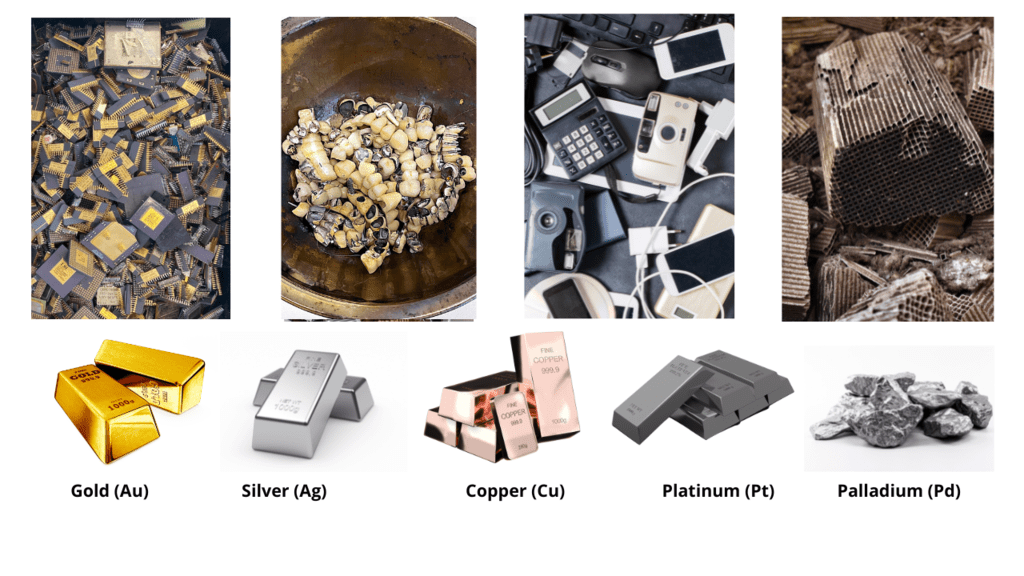
The group of precious metals is also called the group of noble metals because they hardly react in contact with other substances even at high temperatures (“indifference” from a chemical point of view). They are expensive in terms of their monetary value, they are rare in terms of their presence in nature, and they are special due to their chemical properties (for example resistance to corrosion and oxidation). Without gold, silver, palladium, and platinum, all the electronic devices that surround us would not work. The catalytic converter, which is in every vehicle and is responsible for purifying the vehicle’s exhaust gases, was not working. Chemical production and refining processes in the pharmaceutical, chemical, and fuel industries are based on the properties of platinum group metals and are used as catalysts for chemical processes.
The monetary value of the precious metals constitutes an economic incentive to increase waste recycling (mainly electronic and electrical waste) and thus contributes to reducing the waste that is sent to the “landfill”. This is part of the “sustainability” policy, also supported by legislation.
Precious metals recycling from electronic waste and/or “waste” of materials/products that have ended their lives, is a positive economic catalyst for a process called “Urban Mining”, that is, “mining” metals/raw materials from waste found in our urban environment.
And what does the digital transformation of A.G. Metals looks like? asks Calcalist.
Gur explains they operate in several channels to make professional and “niche”ish knowledge accessible to groups working in the fields of precious metals recycling, as well as to create connections within the supply chain between recycling plants and waste producers mainly using digital media channels.
A.G. Metals is also examining possible connections between the precious metals world and the “Blockchain”, by collaborating with Aurus Technologies that created an “ecosystem” to issue digital tokens, backed 100% by silver, gold, and platinum, on top of the “Blockchain” technology (these currencies’ value have not decreased in all the recent crypto crises.)
Ami Gur, material sciences engineer, and owner of A.G. Metals Ltd.