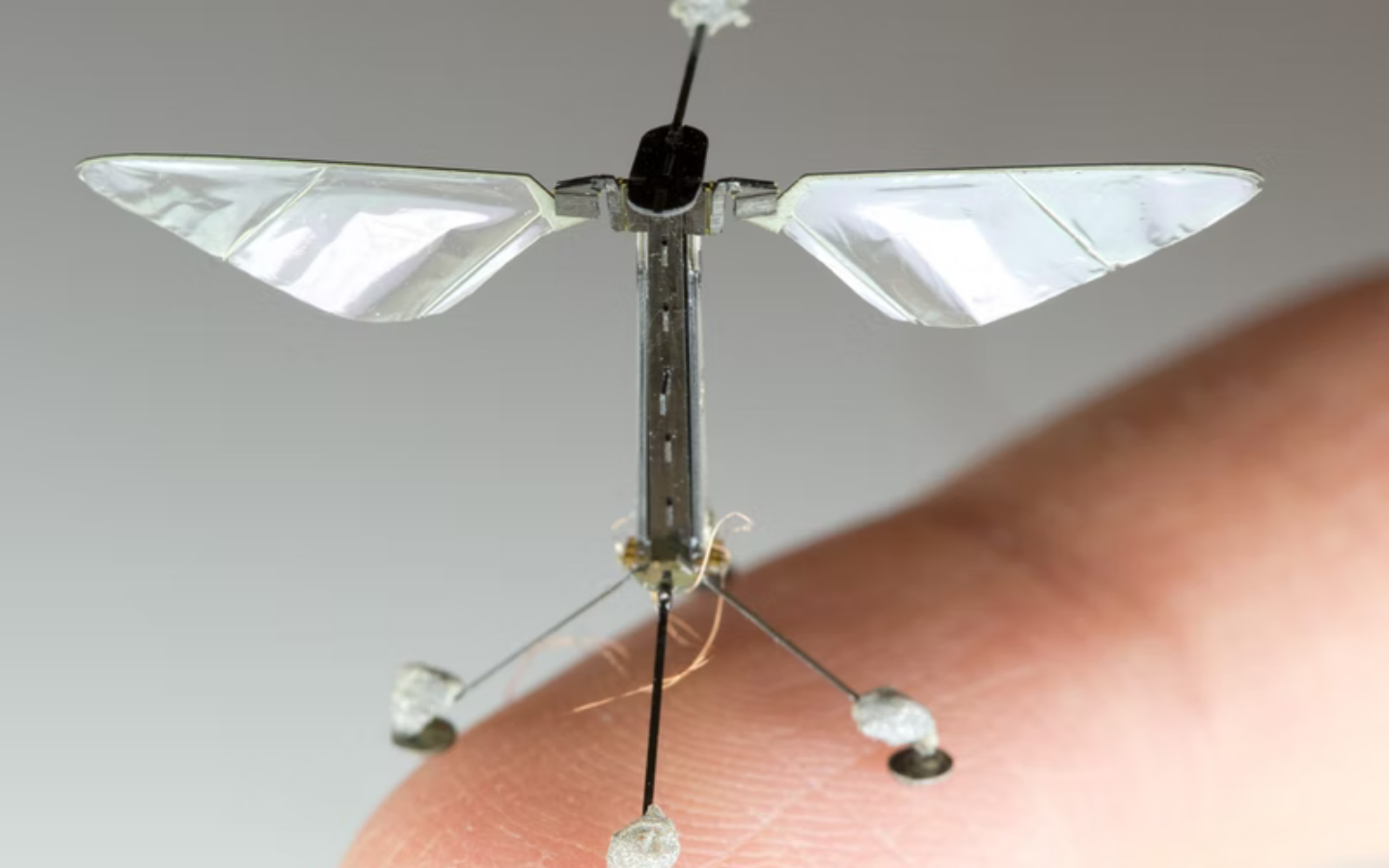

Robo-bees are a new development by a team of researchers from Harvard University. The bees are tiny drones that are designed to help spread pollen in areas where pollinator populations are not developed and large enough. This solution is seen as the next required step in the field of agriculture.
In 2013, the team of researchers showed that the bee drones were able to fly and hover over various objects, but the drones were still connected by a cable and used an external power source. In 2016 the drones could already lean over objects at different angles with the help of static electricity and they also displayed swimming capabilities. The road to autonomous bee drones is still long, the researchers will have to find a small and light enough power source that will be mounted on the drone itself as well as develop the communication capabilities of the drones with each other in order for them to pollinate the area together effectively. Kevin Ma, an engineer from Harvard estimated that it will take another 10 years before the bee gliders can operate autonomously.
In addition to their role as pollinators, the development team plans that the drones will also be used for various tasks such as locating injured and survivors after natural disasters and spying on military targets. The fear that arises from this planning and the development itself is that the drones could be used as a means of warfare and would also be exposed to a hostile takeover which would endanger many people. As of today, drones are responsible for the death of thousands of people around the world and the extent of damage may increase significantly with the completion of the development of the bee drones.
Other potential issues include the durability of the drones, the cost of manufacturing and operating them, and the efficiency of the drones’ performance.